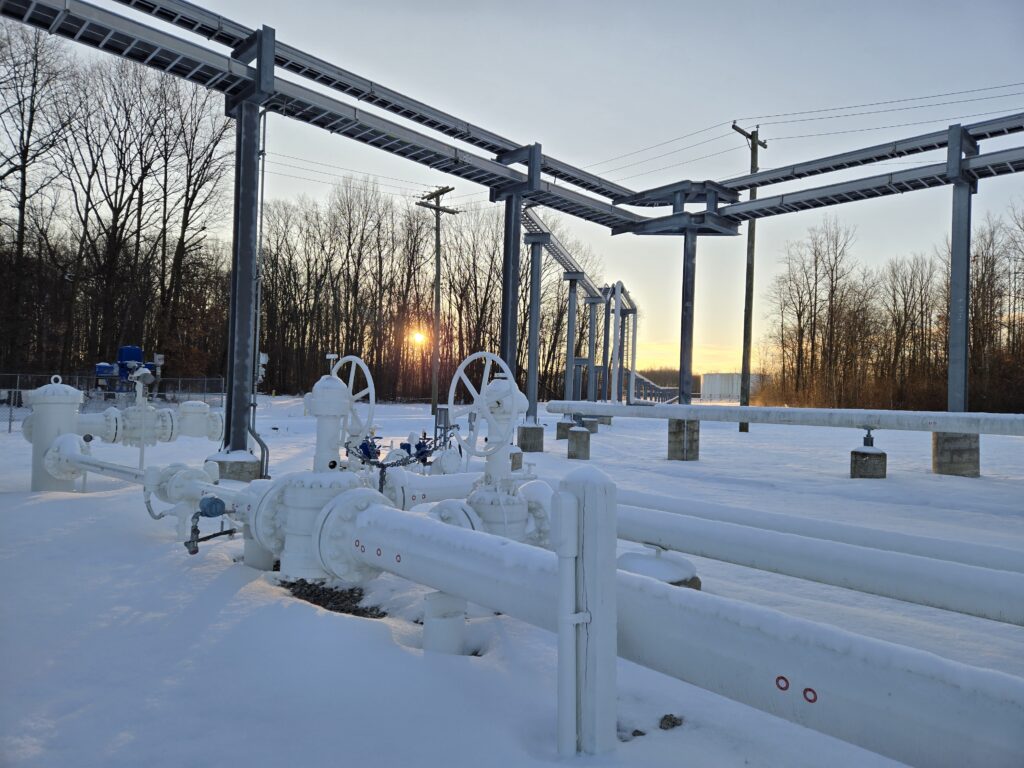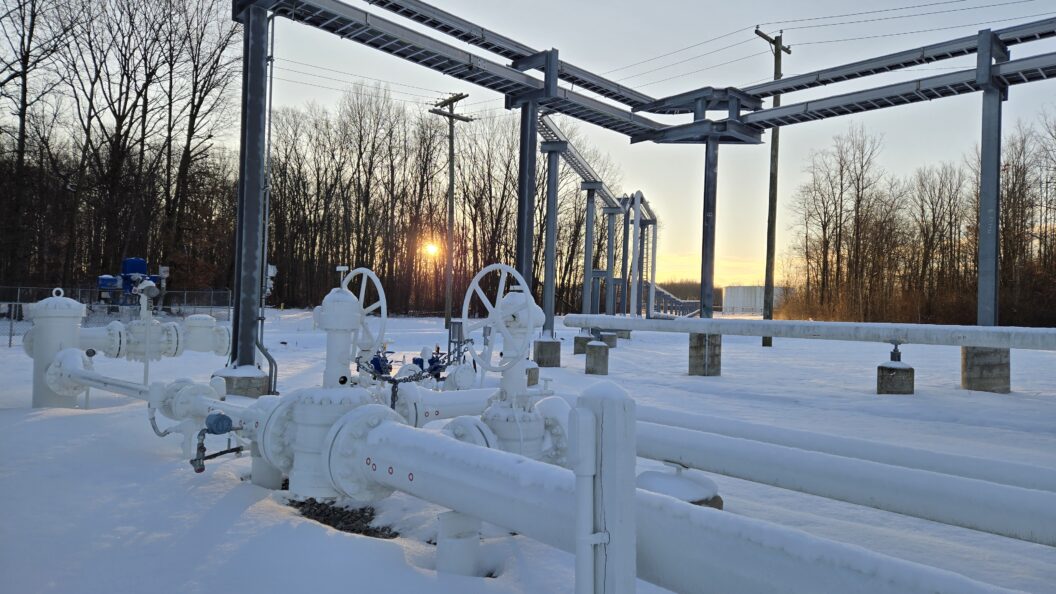
Pull out the sweaters and stock up on cocoa – winter is closer than you think.
At Energy Transfer, we’re already deep into winter preparations. Operating one of the largest pipeline networks in the country means preparing early and investing heavily in infrastructure, technology and personnel to ensure uninterrupted energy delivery, even in the harshest conditions.
We construct and operate our pipelines in accordance with federal and state regulatory requirements, but we also go above and beyond by investing millions of dollars to fortify our assets against winter weather. Some of these additional protections include:
- Weatherizing Facilities: We enclose compressor stations and metering sites at most of our facilities to shield them from weather events, including wind and snow. We also install heat tracing systems along critical pipeline segments to prevent them from freezing.
- Backup Generators: We equip our facilities with backup generators to maintain operations during outages.
- Clearing Pipelines: We routinely run pipeline inspection gauges (PIGs) through our natural gas pipelines to remove liquids and condensation, and inject them with methanol, which acts as an antifreeze, to help prevent ice formation.
- 24/7 Monitoring: We use Supervisory Control and Data Acquisition (SCADA) systems to provide real-time data across our network, allowing us to detect and respond to pressure changes that could indicate freezing.
But Energy Transfer’s winter preparations strategy isn’t just about technology. It’s also about people and planning. Teams are stationed at key assets ahead of storms to ensure rapid response and continuous operations. And when temperatures drop below freezing, we have the ability to withdraw natural gas from our underground storage caverns and reroute natural gas from other regions to meet demand spikes.
Energy Transfer’s winter weather strategy reflects our deep commitment to operational resilience, public safety and energy reliability. Through proactive planning, cutting-edge technology and strategic investment, we ensure that when winter strikes, the lights – and the heat – stay on.